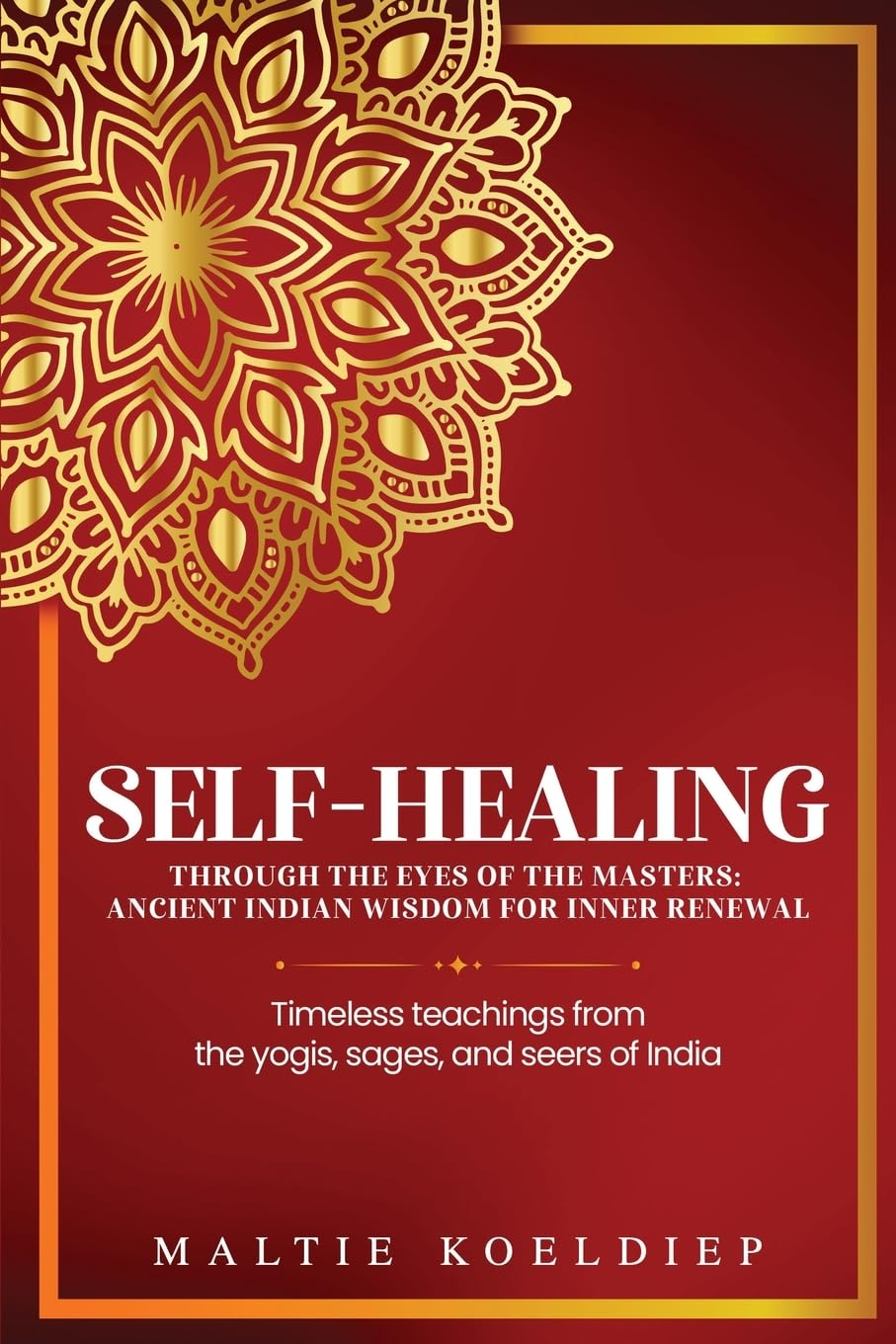
Disconnection from the true Self does not always appear dramatic. It often manifests quietly through restlessness, confusion, dissatisfaction, or a persistent sense that something is missing. In Self-Healing Through the Eyes of the Masters: Ancient Indian Wisdom for Inner Renewal by Maltie Koeldiep, ancient Indian teachings describe the true Self as consciousness beyond body and thought. When awareness becomes overly identified with external roles, emotions, or achievements, imbalance begins. Recognizing the signs of this disconnection is the first step toward realignment.
One common sign is chronic inner agitation. The mind constantly seeks stimulation, validation, or distraction. Silence feels uncomfortable. Stillness feels threatening. According to classical yoga philosophy, this turbulence arises when consciousness becomes entangled in mental fluctuations. Instead of observing thoughts, we become absorbed in them. The result is exhaustion and scattered focus.
Another sign is identity confusion. When self-worth depends entirely on career status, relationships, physical appearance, or social approval, stability becomes fragile. Success brings temporary elevation. Criticism brings disproportionate distress. Advaita Vedanta teaches that the true Self is not defined by changing conditions. When identity rests solely on external markers, insecurity increases because external factors are unstable by nature.
Emotional reactivity also signals disconnection. Minor inconveniences trigger intense anger. Delays produce anxiety. Comparisons lead to jealousy. The three gunas described in Indian philosophy explain this imbalance. Excess rajas fuels restlessness and craving. Excess tamas produces heaviness and apathy. Without cultivating sattva, the quality of clarity and balance, emotional swings intensify.
Physical symptoms can accompany this inner drift. Fatigue without clear medical cause, irregular sleep patterns, digestive disturbances, and chronic tension often reflect lifestyle misalignment. Ayurveda emphasizes that body and mind function as an integrated system. Ignoring natural rhythms, consuming overstimulating media, eating without awareness, and neglecting rest gradually weaken internal harmony.
A deeper sign of disconnection is loss of meaning. Activities once fulfilling feel mechanical. Achievements fail to satisfy. There is a subtle sense of being disconnected from purpose. Ancient Indian wisdom teaches that when life is not aligned with dharma, the inner principle of right action, emptiness emerges. This does not necessarily require dramatic life change. It often requires internal recalibration.
Realignment begins with awareness. Before attempting correction, observe honestly. Notice thought patterns. Notice emotional triggers. Notice daily habits. Without judgment, acknowledge where imbalance exists. This reflective pause creates space for change.
Reestablishing connection to the true Self requires cultivating sattva. Simple practices support this shift. Rise at a consistent time. Spend moments in silence each day. Regulate breath through slow, steady inhalation and exhalation. Limit overstimulation. Eat fresh, nourishing food suited to your constitution. These adjustments restore physical and energetic stability.
Meditation is central to realignment. Sit quietly and observe thoughts without attachment. Ask inwardly, Who am I beyond these thoughts and roles? This inquiry, emphasized in Advaita teachings, gradually loosens identification with transient mental activity. Over time, awareness recognizes itself as the observer rather than the content observed.
Ethical alignment also strengthens connection. Practice honesty, kindness, and moderation. When actions contradict inner values, fragmentation increases. When behavior reflects integrity, coherence returns. Dharma is not abstract philosophy. It is expressed through daily choices.
Nature serves as a powerful corrective influence. Time outdoors recalibrates the nervous system and reminds the individual of belonging within a larger order. Ancient systems consistently advise harmony with natural cycles as a foundation for health.
Realignment is not instantaneous. It unfolds gradually as awareness deepens and habits stabilize. The true Self was never absent. It was obscured by identification and distraction. When agitation softens, when craving decreases, when clarity increases, connection becomes evident.
Disconnection produces fragmentation. Realignment restores integration. By observing honestly, simplifying lifestyle, cultivating balanced qualities, and engaging in contemplative practice, the individual returns to a state of inner steadiness. In that steadiness, the true Self is not discovered as something new but recognized as what has always been present.
Read this book, available on Amazon: https://www.amazon.com/dp/1971228133/.