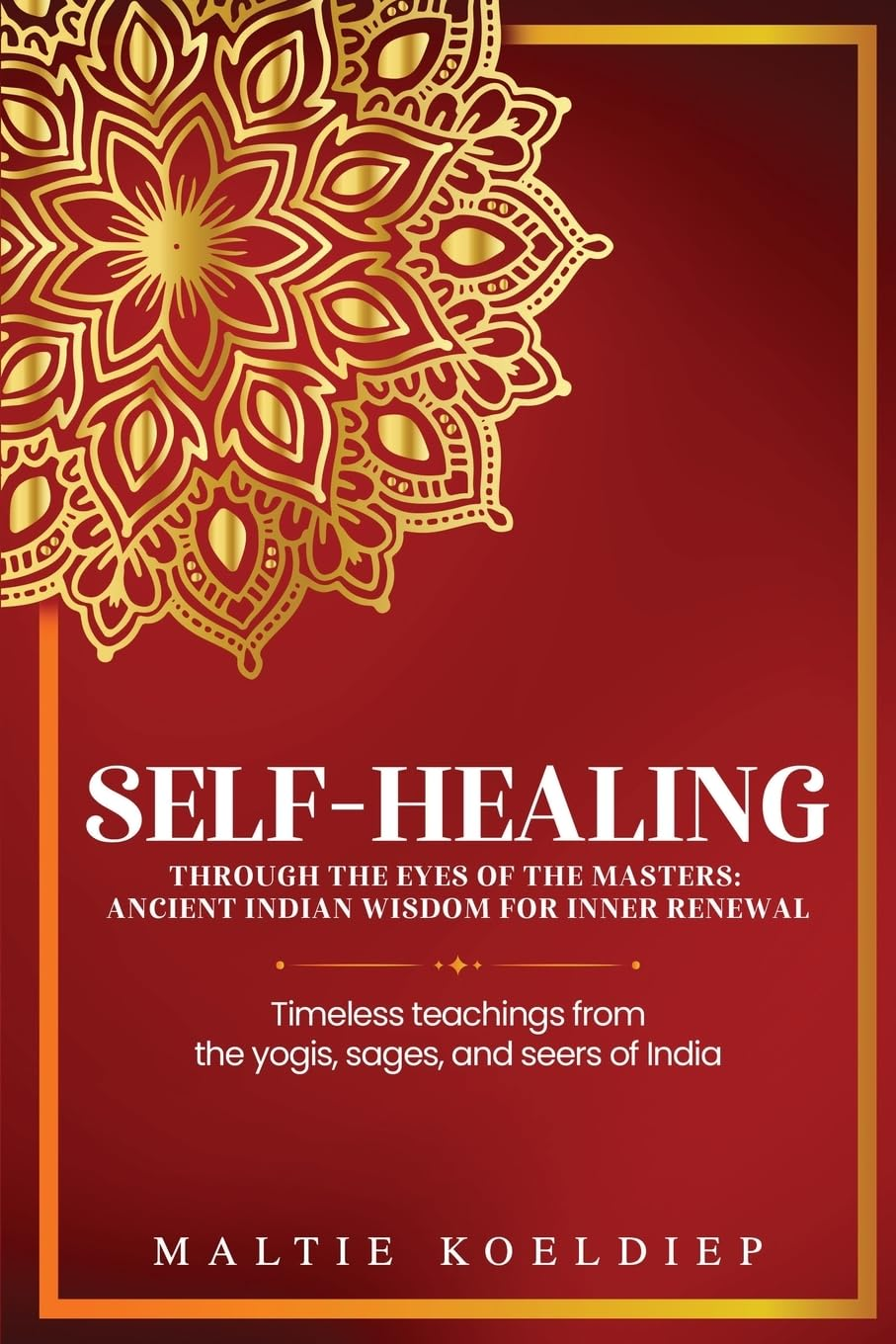
In recent years, modern wellness trends have surged in popularity. From detox regimens and biohacking to mindfulness apps and superfood supplements, the industry promises vitality, longevity, and mental clarity. Yet long before these movements emerged, ancient Indian healing systems offered comprehensive frameworks for health that addressed the whole human being. In Self-Healing Through the Eyes of the Masters: Ancient Indian Wisdom for Inner Renewal by Maltie Koeldiep, these timeless traditions are presented not as trends but as enduring sciences of inner balance. Comparing ancient Indian healing with modern wellness reveals both overlap and significant differences in depth, intention, and philosophy.
Modern wellness often focuses on optimization. The language is performance oriented. Improve productivity. Enhance focus. Increase energy. While these goals are valuable, they frequently remain centered on external achievement. Health becomes a tool for efficiency. Ancient Indian healing, by contrast, begins with self-understanding. It asks a foundational question: Who are you beyond the body and mind? Without this inquiry, improvements in diet or fitness are considered incomplete.
Ayurveda, one of the central healing systems discussed in the book, approaches health through balance of the three doshas: vata, pitta, and kapha. Illness arises when these governing principles become disturbed by diet, environment, lifestyle, or emotional patterns. Treatment is individualized. Rather than applying universal protocols, Ayurveda evaluates constitution, daily routine, digestion, climate, and mental state. Modern wellness trends often promote generalized solutions that may not consider personal constitution with equal depth.
Another distinction lies in prevention versus reaction. Ancient Indian systems emphasize daily discipline. Rising early, eating seasonally appropriate food, practicing breath regulation, maintaining ethical conduct, and cultivating mental clarity are considered preventive medicine. Health is preserved through rhythm and moderation. Modern wellness, in contrast, often responds after imbalance appears. New supplements or intensive programs are introduced once fatigue or stress becomes evident.
Yoga provides another example. In contemporary culture, yoga is frequently reduced to physical postures. Classes emphasize flexibility and strength. However, classical yoga as outlined by Patanjali is an eightfold path that includes ethical behavior, self-discipline, breath control, concentration, meditation, and absorption. Physical posture is only one component. Ancient Indian healing integrates morality, psychology, and spirituality within health practice. Modern adaptations sometimes isolate techniques from their philosophical foundation.
Mindfulness offers an area of convergence. Many modern therapeutic approaches now incorporate mindfulness for stress reduction and emotional regulation. This aligns closely with Buddhist teachings on awareness and non-attachment. Yet in traditional context, mindfulness is not solely a stress management tool. It is a path toward liberation from suffering through deep insight into the nature of reality. The aim extends beyond symptom relief to transformation of perception.
Energy systems such as chakras and prana further illustrate differences. Ancient Indian healing recognizes subtle energies influencing physical and emotional states. Practices such as pranayama, mantra, and meditation regulate these energies. Modern wellness increasingly acknowledges breathwork and nervous system regulation, yet the metaphysical framework is often minimized or removed. The ancient systems integrate physiology and consciousness rather than separating them.
There is also a contrast in time perspective. Modern wellness trends evolve rapidly. What is popular this year may be replaced next year. Ancient Indian healing has endured for thousands of years. Its longevity suggests a depth rooted in sustained observation of human nature. These teachings were refined through generations of contemplative inquiry rather than short term experimentation.
This comparison does not require choosing one over the other. Modern research has validated many ancient practices, including meditation and breath control. Technology can expand access to knowledge. However, ancient Indian healing offers a reminder that true wellness extends beyond optimization. It includes ethical alignment, self-knowledge, emotional balance, and spiritual awareness.
Ultimately, modern wellness seeks improvement. Ancient Indian healing seeks integration. One emphasizes enhancement of function. The other emphasizes harmony of being. When combined thoughtfully, contemporary tools and timeless wisdom can support a more complete understanding of health. Yet without the foundational insight that human beings are layered, conscious, and interconnected, wellness risks becoming another pursuit rather than a path toward lasting inner equilibrium.
Read this book, available on Amazon: https://www.amazon.com/dp/1971228133/.